 01
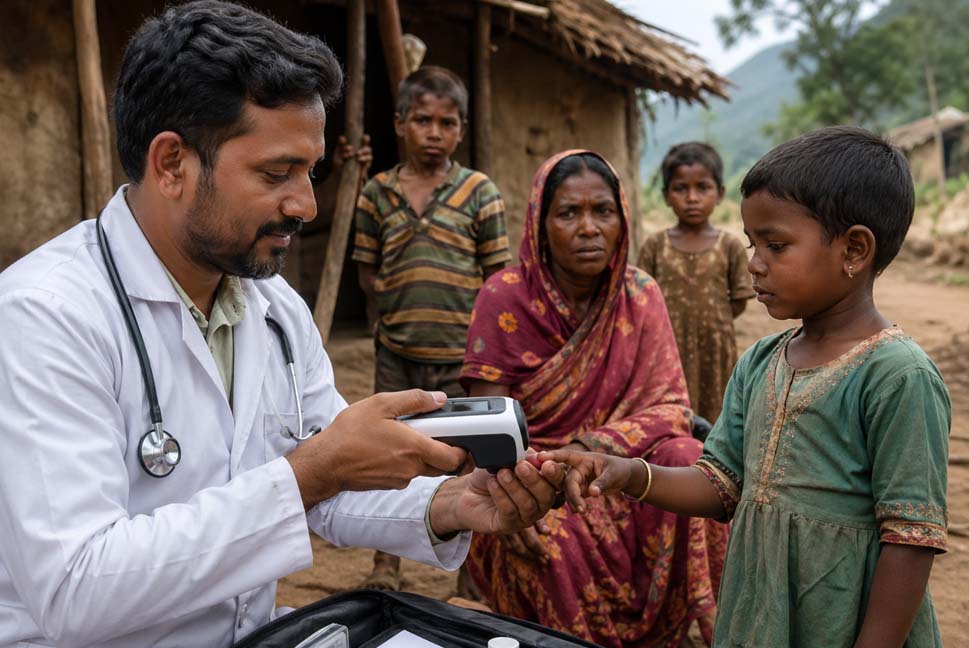
Remote villages & small islands
Past where the road or the ferry ends. A single unit captures an objective read on the spot — to store, send, or escalate as connectivity allows.
Community healthIsland clinics
Aurorus gives medics an objective read on a patient's physiological state in minutes wherever care is required. It's rugged, battery-powered, and built to travel, with no lab, no consumables, no needle, and no specialist required. Whether in a remote village, on an isolated island, or in an active combat zone, Aurorus is a cost-effective way to triage faster and guide what care comes next.
01Past where the road or the ferry ends. A single unit captures an objective read on the spot — to store, send, or escalate as connectivity allows.
 02
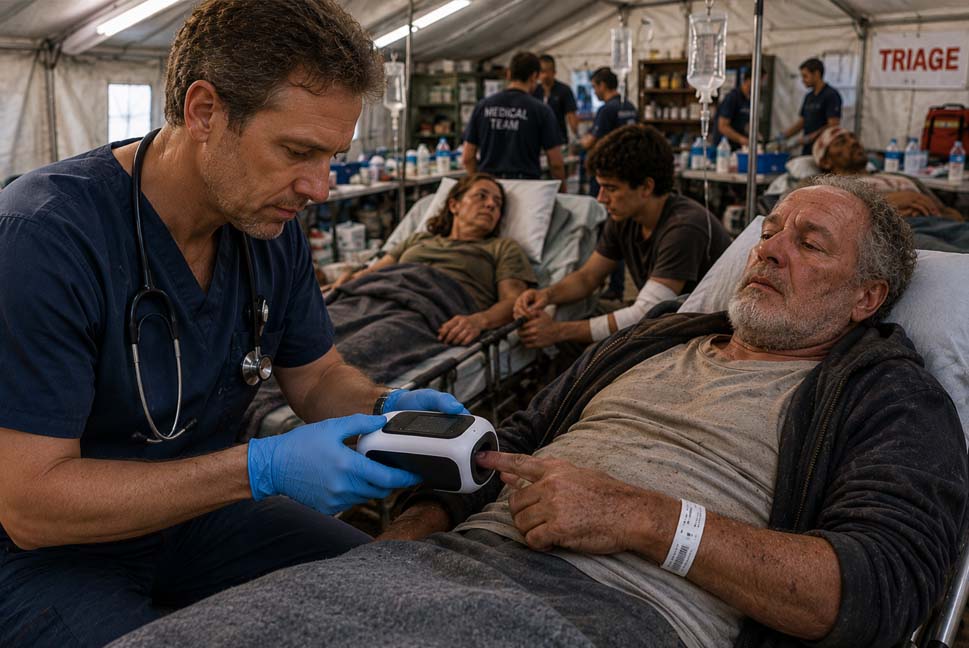
For humanitarian and disaster-response teams, a battery-operated scanner triages and monitors at scale without supplies that have to be flown in.
 03
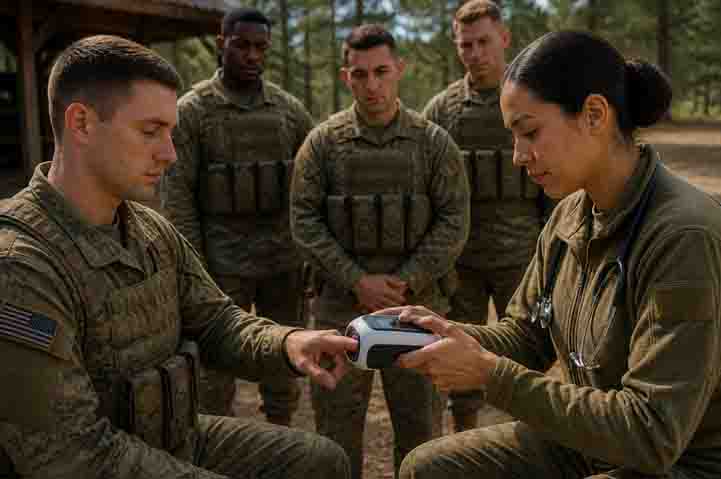
An objective baseline at point of injury — including signal for blast and concussive injury that routinely hides from field assessment.
Images are for illustrative purposes only.
Every constraint of the austere environment was a design requirement: no mains power, no cold chain, no consumable supply line, no specialist operator, and no assumption of a network.
A self-contained handheld unit that travels in a standard medical pack. No tethered console, no fixed install, no fragile bench instrument to keep level.
Runs off its own rechargeable battery for a full field shift — chargeable from mains, vehicle, or portable solar. Functions completely independent of grid power.
Nothing to resupply, refrigerate, or dispose of as biohazard. No reagents, no cartridges, no sharps — the supply line that usually fails in the field simply isn't there.
A guided seven-minute scan operable by a medic, nurse, or trained health worker. The skill sits in the device, not in years of phlebotomy or lab training.
The scan does not depend on a connection. Data is captured and stored on the device, then moves the moment any channel becomes available — across four independent paths, so the read reaches a clinician whether the medic is in a city, a valley, or the middle of an ocean.
Offline-first by design. When no link exists, the scan is still performed and the data is held on the device — store-and-forward means it syncs automatically the next time the unit sees a network. The medic is never blocked by the absence of a signal.
An objective layer under decisions that, in austere settings, have been made almost entirely on observation and experience.
When casualties outnumber hands, a quantitative read of physiological state helps sort who is genuinely critical from who looks stable but isn't — and re-sort as the situation changes, without waiting on a lab that doesn't exist.
Fast, repeatable scans turn monitoring into a trend rather than a snapshot. A patient can be re-read every interval during prolonged care or transport, surfacing deterioration before vital signs cross the obvious threshold.
Subclinical traumatic brain injury routinely evades field assessment. Aurorus provides objective signal where there was previously only observation — directly relevant to the operational environments where blast exposure is common.
Evacuation slots, blood, beds, and clinician attention are all finite in the field. Objective data sharpens the stay-or-evacuate and who-goes-first calls that determine where those scarce resources actually go.
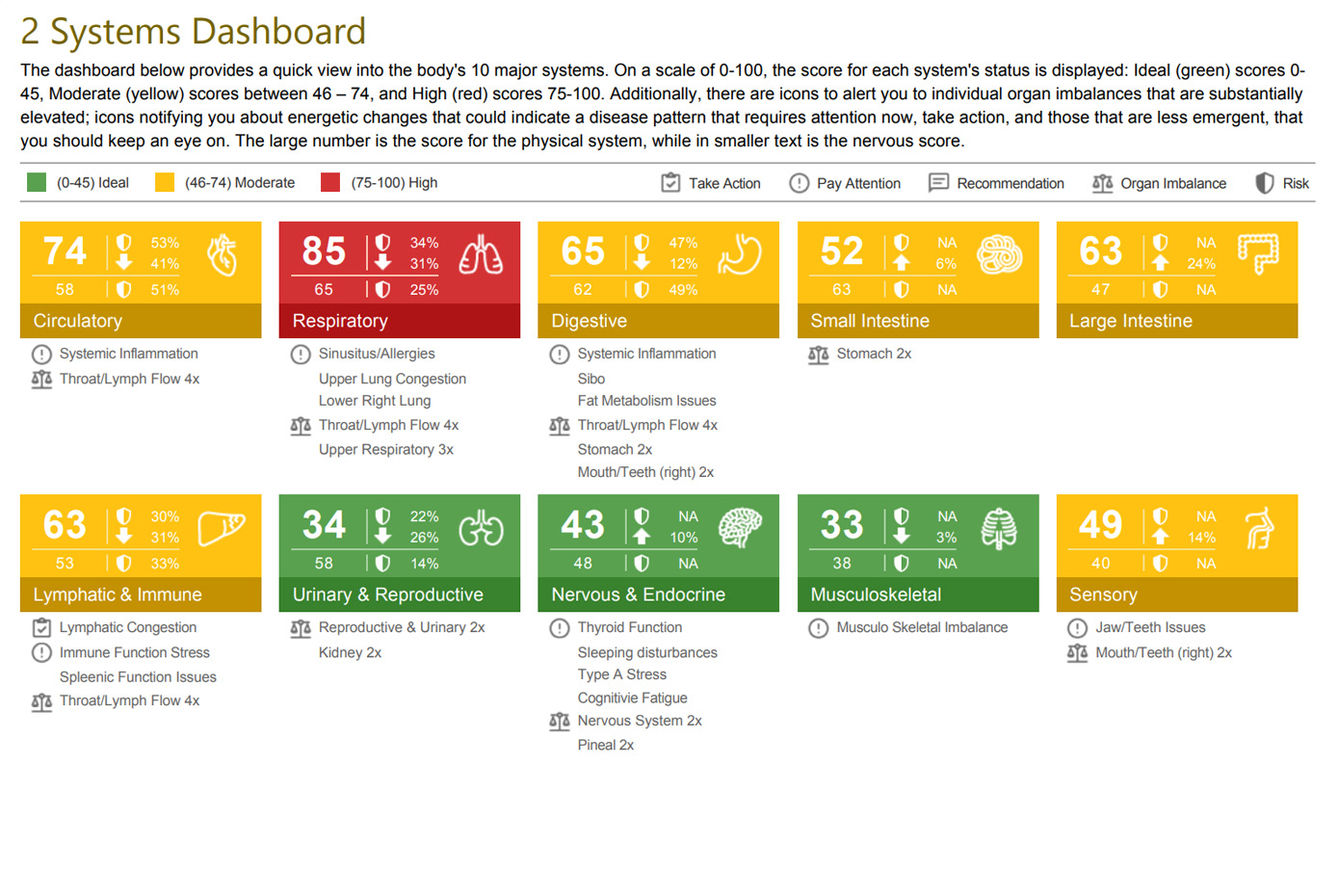
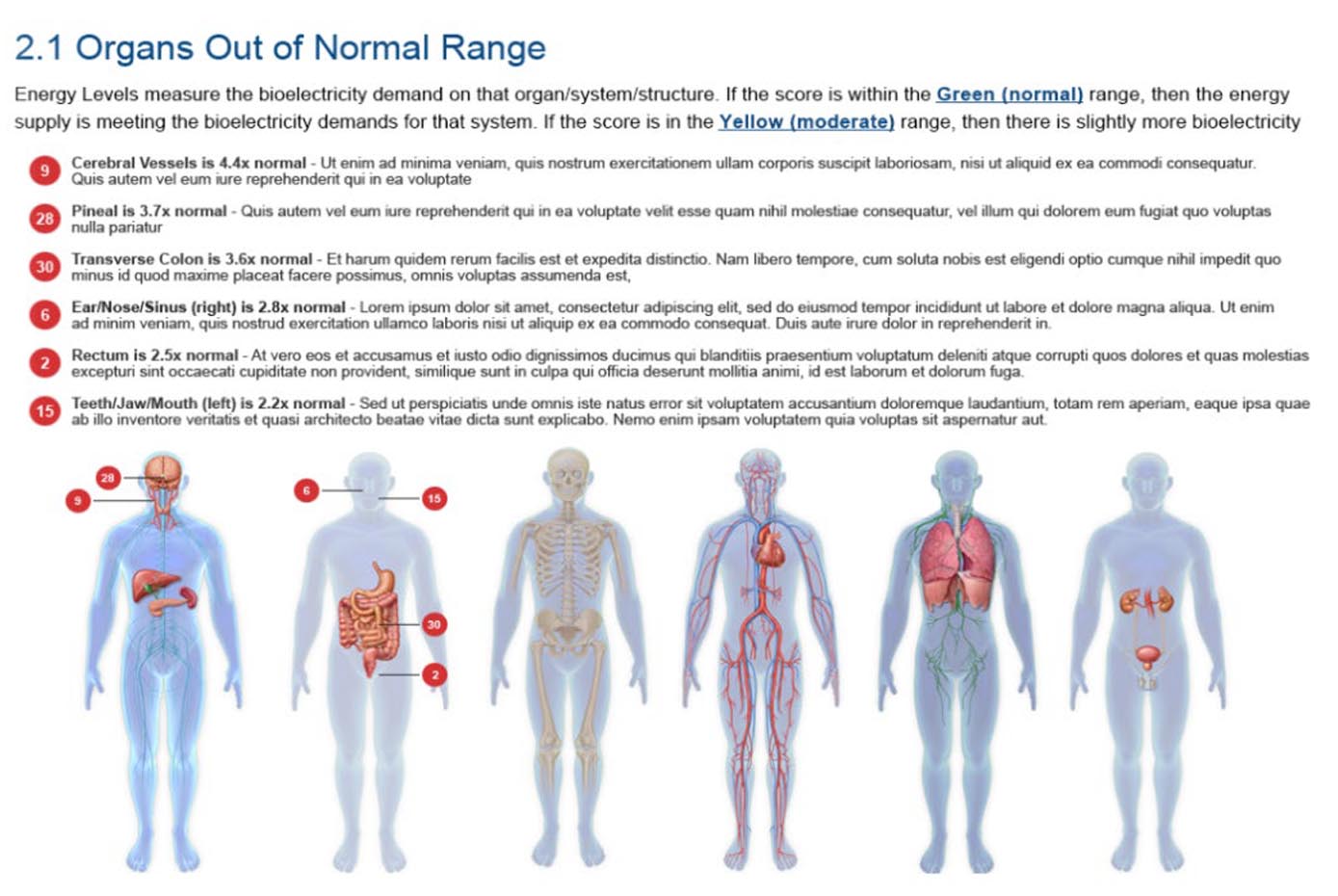
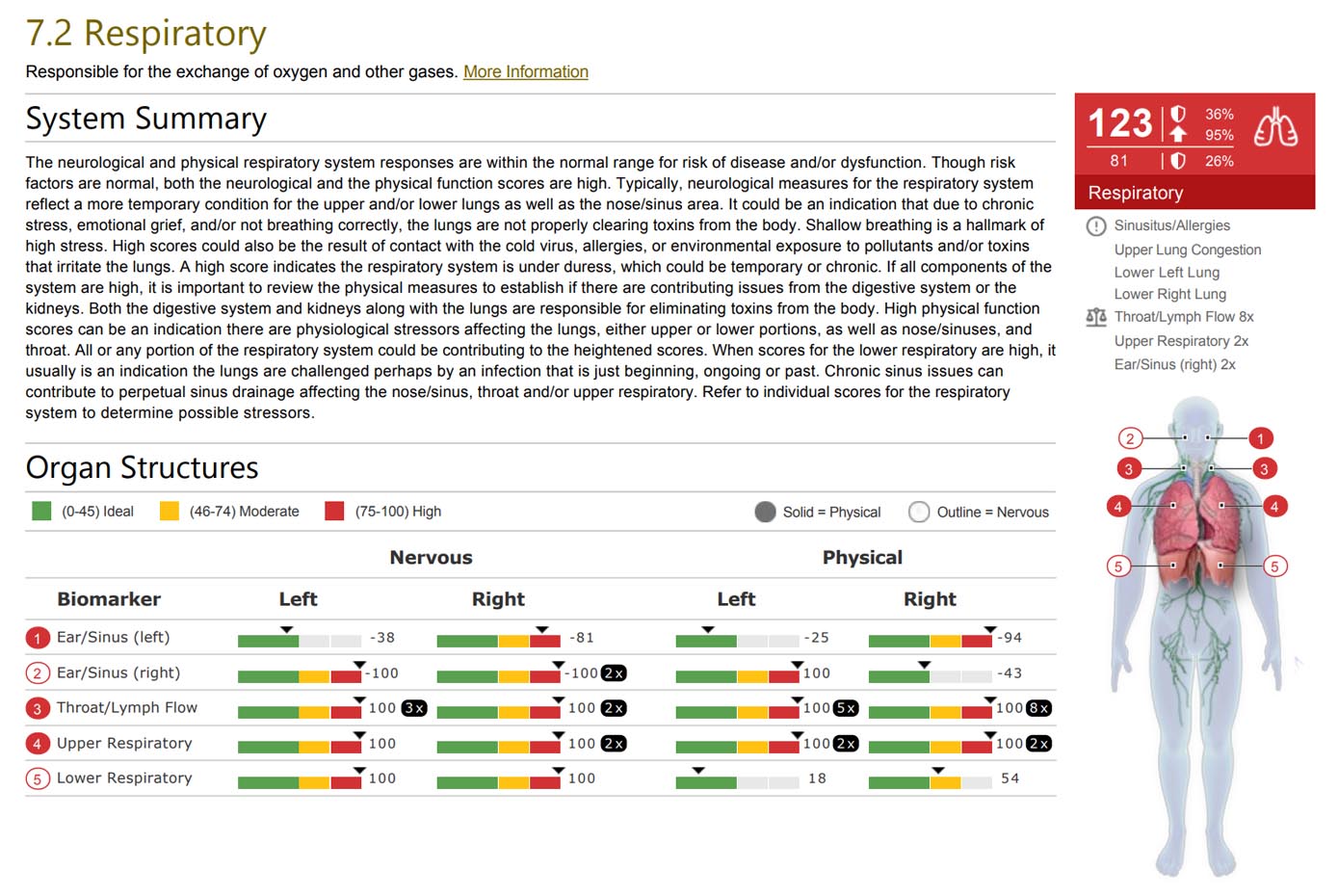
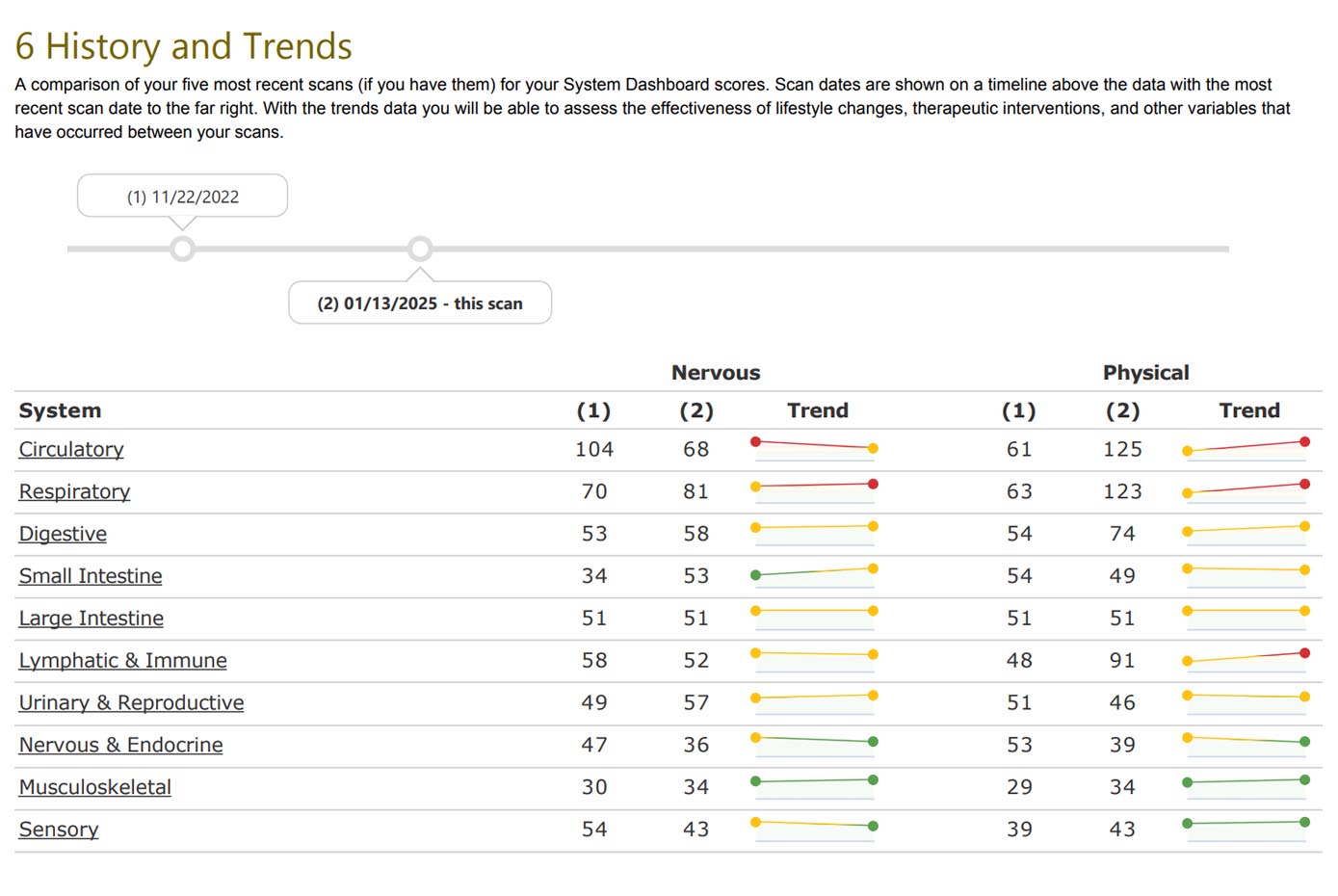
The seven-minute scan resolves into a readout the medic can act on in the field and a clinician can read anywhere it lands — a color-coded view of the body's major systems, the organs running out of range, and how today's numbers compare to the last scan.
Of every injury the field medic has to assess without instruments, traumatic brain injury is among the most dangerous to miss — and the hardest to see. Blast and concussive injury can present with stable vital signs and a patient who insists they're fine.
Building on a 2015 blinded feasibility study (NCT02471625) — a small early study that distinguished recent head-trauma cases from controls, including cases with normal CT. These studies are for informational purposes and do not constitute diagnostic claims.
It is precisely the austere environment — far from imaging, far from a neurologist — where an objective, carried read of this kind changes the decision in front of the medic.
The austere environment is exactly where overstating a tool's reach does the most harm. We are deliberate about Aurorus's role.
Tell us where you operate and what you're trying to assess. We'll route the conversation to the right person on our team.
For combat medics, forward care, and defense program offices.
Program inquiry →For disaster response teams and NGOs working in austere settings.
Deployment conversation →For island clinics, offshore operators, and remote community health programs.
Field briefing →Aurorus is an electrophysiological measurement system cleared by the FDA under De Novo classification (DEN150004). It is not an in-vitro diagnostic and does not replace clinical judgment, definitive care, or laboratory testing where required.